John James co-founded the
Newsboys in a garage, fronted them all the way to arenas, and then lost
everything.
He stayed away from music for close to thirty years. This is the record that
brought him back, and every demo he sent me before it existed.
Written by David GlennAugust 2026Album produced by David Evans and David Glenn
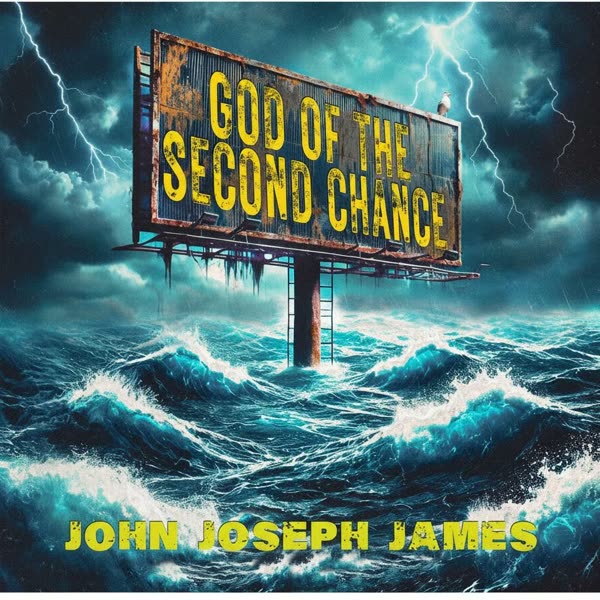
God of the Second ChanceLP · June 2026
1985 to 2026
The shape of the story.
Four decades in one line. Everything below walks it slowly.
1985Queensland
A friend's birthday party, a band that needs a singer, and Saturdays in Peter Furler's parents' garage.
Read 1985
1987The crossing
They leave Australia for America. Eight thousand miles, a manager with no contract, and no record out yet.
Read 1987
1988The run
Six records in nine years. Arena stages, and it's John out front.
Read 1988
1997The kitchen
Peter Furler's home studio, the night the band is cutting Entertaining Angels. John tells him everything. Within days he's out.
Read 1997
afterThe wilderness
Divorce, drugs, a depression that closed over the whole thing. Lamingtons sold door to door out of a basket. Close to thirty years away from music.
Read the years away
2006Brisbane
David Evans. A record called Breathe Again, and a church plant on the coast where it all started.
Read 2006
2024The room
Dave Evans puts John in a room with David Glenn. Source Worship, Ellenton, Florida. Tracking runs June to late August, and the rest of it runs on into the back half of the year.
Read 2024
2026The record
God of the Second Chance, released 2 June 2026. His book lands the same day.
Read 2026
1985 · Queensland
The garage
Before the name, before the visas, before any of it. Four teenagers on the Sunshine Coast and a drum kit in somebody else’s parents’ garage.
John was eighteen when he met Peter Furler at a friend’s birthday party. Peter
had a band. What the band didn’t have was a singer.
That’s the whole origin. Peter on drums, George on guitar, Shawn on bass, and a gap out
front that John walked into.
They rehearsed at Peter’s parents’ place, on the Sunshine Coast. John’s own
phrase for it is “we graciously confiscated their garage.”
They called themselves The News. That lasted until somebody pointed out that Huey Lewis
had already taken it, and The News became the Newsboys.
Wes Campbell ran a Christian coffee shop on the coast on Friday nights, five dollars at
the door. He asked to manage them. There was no contract. There was never a contract. The press
keeps calling him a co-founder; he wasn’t. He was the man who said yes first.
“We started here in Australia. Just a bunch of guys. Dreams, hopes,
aspirations. Uneducated but passionate.”
John James
The Glass House Mountains, standing over the country the band came out of.Mooloolaba, on the Sunshine Coast.A Queenslander up on its stumps, built for the heat.
1987 · The crossing
Eight thousand miles
They weren’t signed to anything in America. They went anyway.
In 1987 the band left Australia for the United States. Not on the back of a hit. On the back of
a manager with no contract and a conviction that these songs belonged somewhere bigger than a
Friday night coffee shop.
The distance is the part everybody skips. From the Queensland coast to the American mainland is
roughly eight thousand miles. In 1987 that’s the better part of a day in the air, one
way, and you don’t come home for a weekend if it isn’t working.
They signed with Refuge Communications once they were there. Read All About It
followed in 1988.
Everything the band became, every arena on the next page of this story, sits on top of a
decision three young men made before any of it was promised to them.
The country they landed in.1987. If you wanted to hear a voice from home, this is what you used.
1988 to 1996 · The run
Six records in nine years
From a band nobody noticed to arena headliners with secular distribution, and John out front the whole way.
1988Read All About It. Refuge Records. The first one. Almost nobody
noticed, and the lineup changed again.
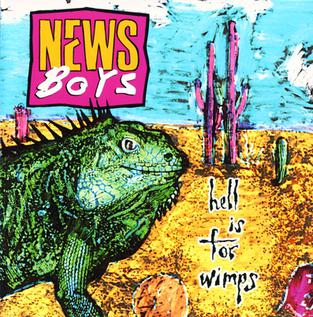
1990Hell Is for Wimps. Star Song.
1991Boys Will Be Boyz.
29 Sept 1992Not Ashamed. Number 11 on the Christian chart, and the
first real sign the thing was working.
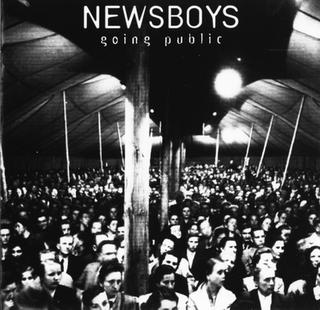
26 July 1994Going Public. Number 2, and certified gold. More than half
a million copies.
1996Take Me to Your Leader. Virgin handled distribution outside the
Christian market, and that autumn the band headlined arenas for the first time, with Geoff Moore
and the Distance and Plankeye opening.
The same year they made a film, Down Under the Big Top, built around the song
“Reality.” It’s the only one John appears in.
He sang lead on Shine. On Take Me to Your Leader. On Not Ashamed. If those
records are in your memory at all, the voice in them is his.
“One of the most successful tours that year in America, Christian or
secular.”
John James, on the Take Me to Your Leader tour
Hell Is for Wimps, 1990.Boys Will Be Boyz, 1991.Going Public, 1994. Gold.Take Me to Your Leader, 1996. The last record John made with the band.
1997 · The kitchen
The night in the kitchen
The band was cutting “Entertaining Angels.” John was in the kitchen telling Peter Furler the truth. He was out within days.
It happened at Peter Furler’s home studio, during the sessions for
Step Up to the Microphone. The band was tracking “Entertaining Angels.” John went
into the kitchen and told Peter everything.
Within days he was gone.
Nine years earlier he’d flown to a country he had never lived in with no record deal
waiting. Now he was flying the other way.
A note on the date, because the record is wrong nearly everywhere.
Cross Rhythms, and most outlets that followed it, put the departure in 1996. John himself puts it in
1997, in a filmed sit-down in March 2026, and ties it to a specific night and a specific song. The
Step Up to the Microphone sessions place it there too. This piece uses his date, not theirs.
The last record he made with them.The stage, after.
After · The years away
The wilderness
“The wilderness” isn’t our word for it. It’s his.
John has a name for the years that followed, and he is the one who uses it.
“Taken into the wilderness where that John James had to die.”
John James
He doesn’t offer it as a soft word for a rough patch. He describes it as
“gut-wrenching dying to self, and allowing God to heal wounds such as abandonment,
rejection, and unfaithfulness.”
The marriage went first. Then drugs became the exit. Then a depression that closed over the
whole thing.
His own account of how it happened is short, and it costs him something every time he says it:
everything he was had been wrapped up in being a Newsboy, and that mattered more to him than his
marriage did.
There were lamingtons sold door to door out of a basket. There were close to thirty years with
no music in them.
He tells all of it on purpose. This isn’t the chapter he’s trying to get past. It is
the one he preaches, in prisons and recovery centres and schools, because it’s the chapter
where Jesus is doing the work.
Lamingtons. Sold door to door, out of a basket.The years he now spends telling people about it.
2006 · Brisbane
The man who would not let it end
A pastor on the Sunshine Coast, a record called Breathe Again, and the first person who refused to let this story stop where it stopped.
By October 2006 John was in church leadership on the Sunshine Coast, working alongside a
pastor named David Evans.
The same coast the band came out of. A completely different life.
There was a record, Breathe Again. There was a church plant. And there was Dave, who is
the reason there is anything at all after this point in the story.
Queensland doesn’t announce itself. The jacarandas come every year whether anyone is ready
for them or not. The lorikeets are loud and completely unbothered. A brush turkey will take a
garden apart in an afternoon and feel nothing about it. It is a good place to be nobody for a
while.
Jacaranda season in Brisbane. It arrives whether anyone is ready or not.A rainbow lorikeet, Redcliffe. Loud, everywhere, unbothered.A brush turkey, doing what brush turkeys do to a garden.
2024 · The room
Dave puts them in a room
Dave Evans reintroduces John James to David Glenn. That is the whole hinge of this record.
Ten years after they had last spoken, Dave Evans put John and David Glenn in a room
together.
Dave did the math out loud and turned to John.
“You’re going to hire David. He’s going to take your project
to another level.”
David Evans
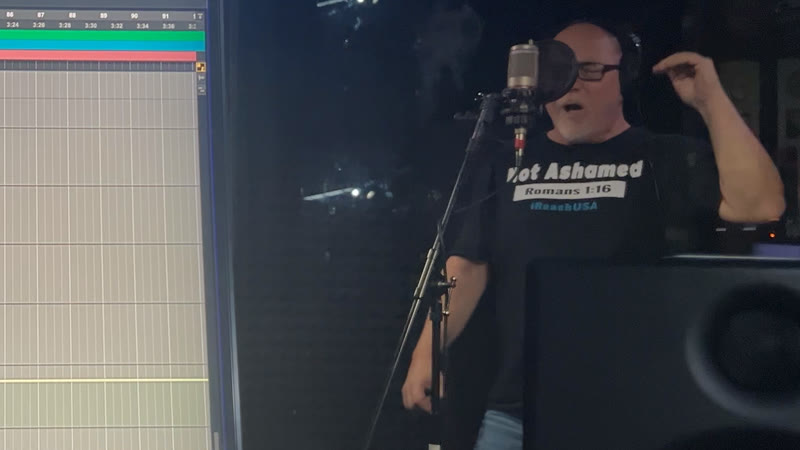
A handshake, and then John was standing in front of a microphone in a room David had just wired.
On paper the job was engineering John’s vocal sessions. That is not remotely what it became.
It became vocal production, because he hadn’t sung seriously in years. It became writing,
because lines weren’t landing and they changed them. It became the record.
The roomSource Worship, Ellenton, Florida.
TrackingJune to late August 2024.
Everything elseEditing, vocal tuning, mixing and mastering ran well past the
last tracking day and on into the back half of the year.
The date printed on a sleeve is one day. This record took most of a year.
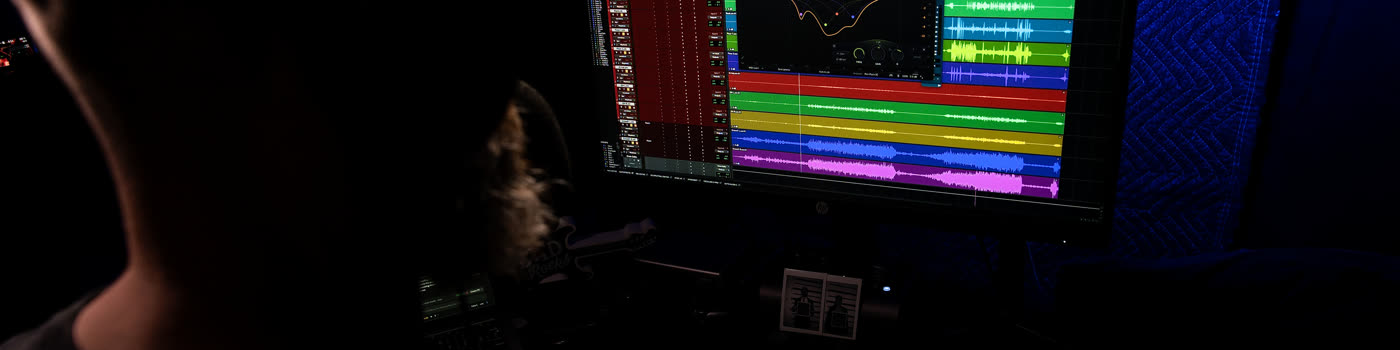
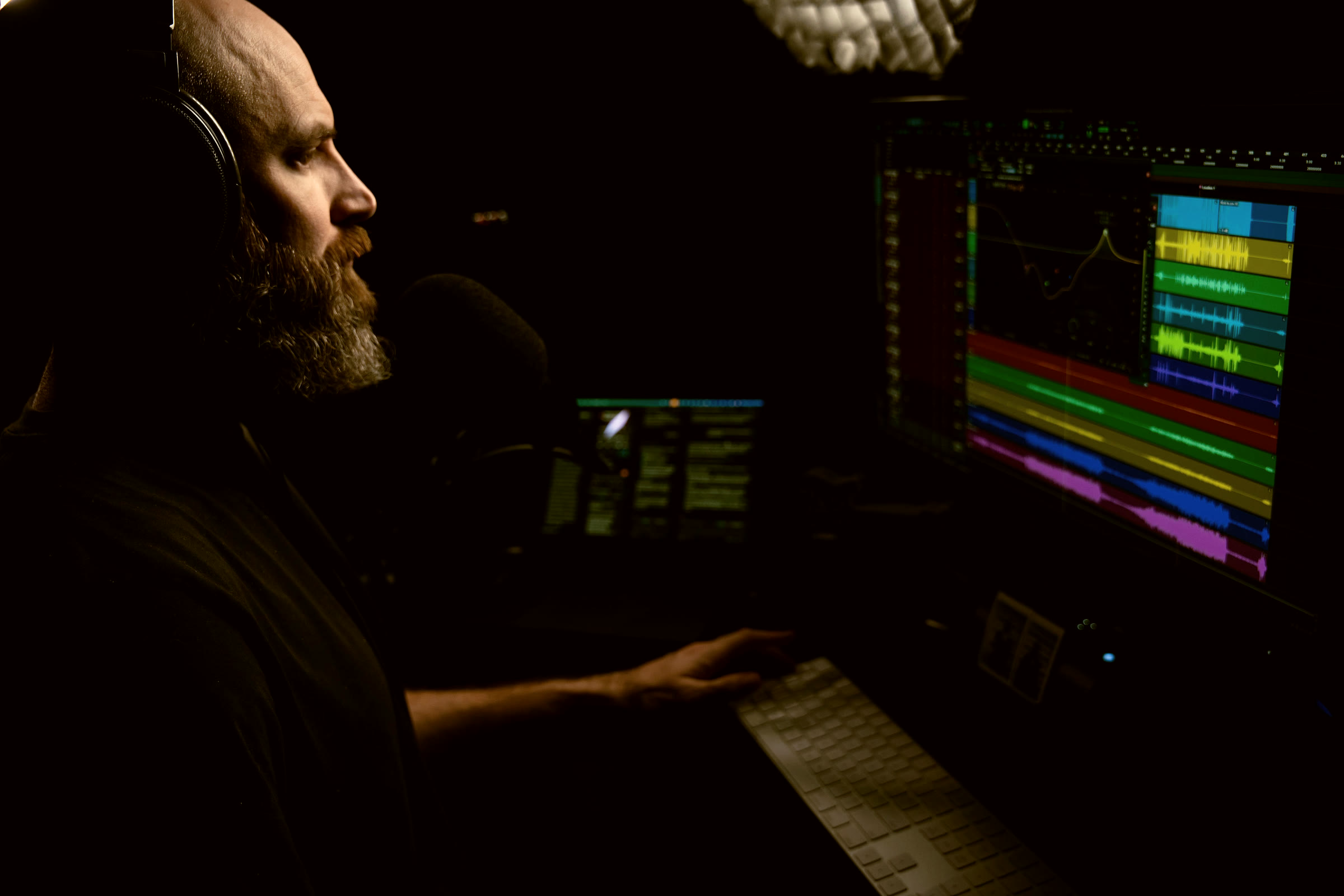
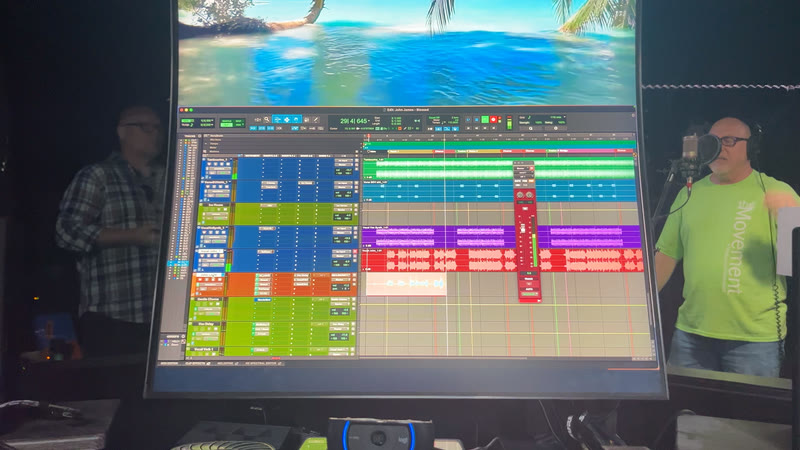
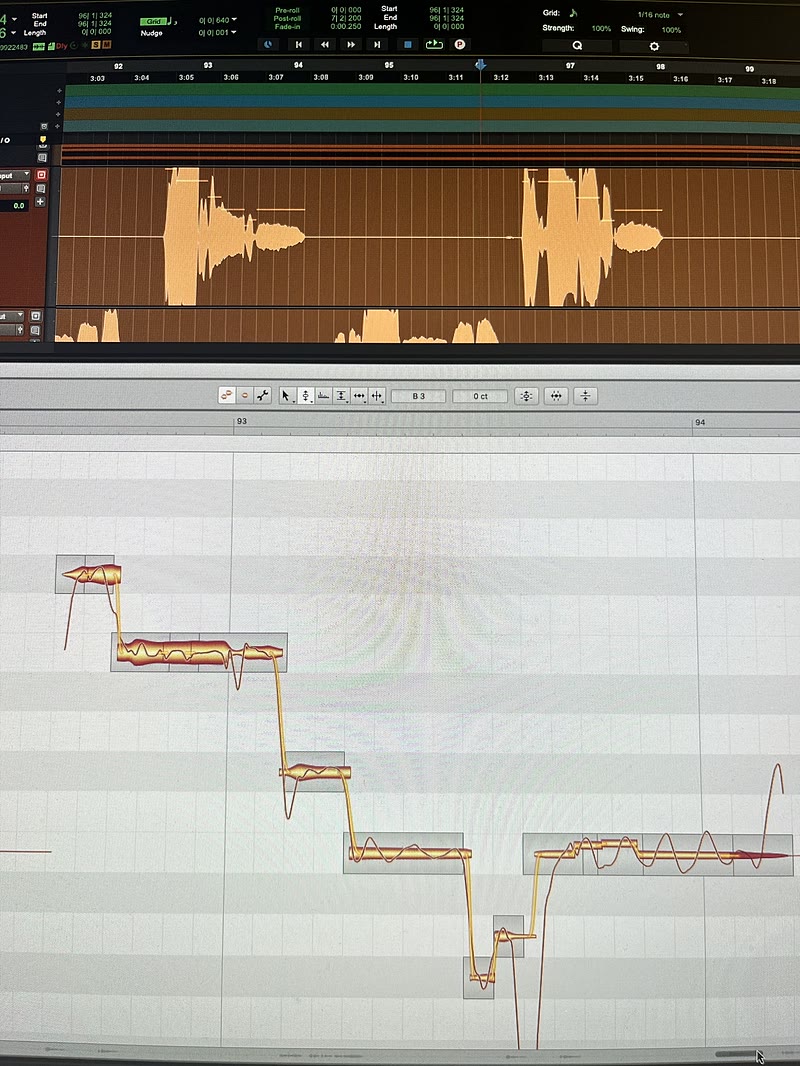
John James, mid-take.The control room during tracking.Vocal tuning. Every one of those curves is a decision about a syllable.
2026 · The record
Both of them, in the same week
First new music in close to thirty years, and a book with his name on the front, landing on the same day.
God of the Second Chance was released on 2 June 2026.
“I’m releasing something I never imagined would happen again. My
first new music in nearly 30 years.”
John James
The book landed the same day. Newsboy: My Story of Hope and Second Chances, BroadStreet
Publishing, 224 pages, with a foreword by David Smallbone, the manager John credits with
helping the band get their first record deal. Forty years later he writes the opening pages of the
book about it. That is a circle closing.
There is a way to get both at once. Order the book, email the receipt to Tanya, and the full
album download comes back to you. It’s their own offer, on their own site.
Newsboy: My Story of Hope and Second Chances. BroadStreet, June 2026.God of the Second Chance. Released 2 June 2026.
I The garage
John Jameswas raised in Far North Queensland, in a
town so Sicilian it was nicknamed Little Italy. His father Frank was
first-generation and charismatic, and he was running a double
life around an illegal gambling book. His mother Joy left. At four, an aunt and uncle
took him in.
In 1979 a man named Graham pulled up in a rattling van and invited him to a youth club
that had food. John got in the van. What he found there was Jesus, and everything else
in this story runs on that.
His father found the same faith later, on a road to Damascus of his own, and came back
to lead the family to Christ. John doesn't soften what that means.
The scrapbook
Not the family album. That belongs to John. This is the country itself, as the
cameras of the day saw it.
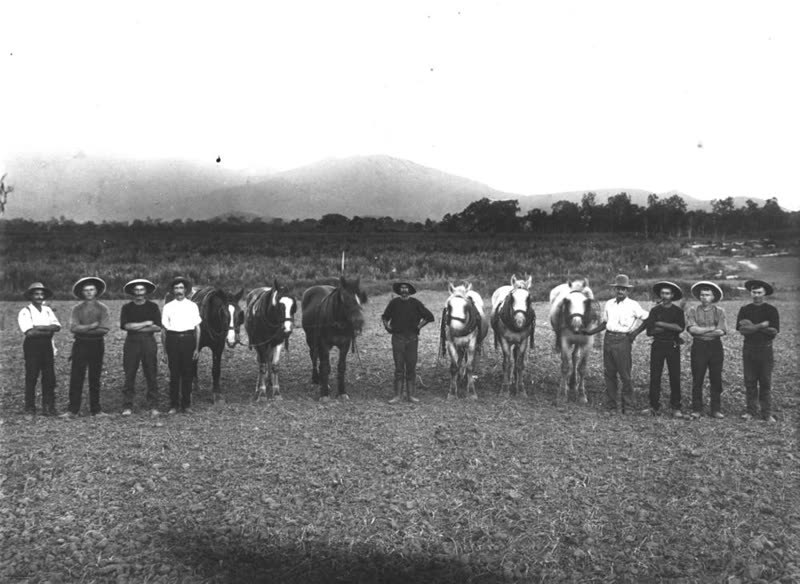
Cane workers, Far North Queensland, 1911.State Library of Queensland
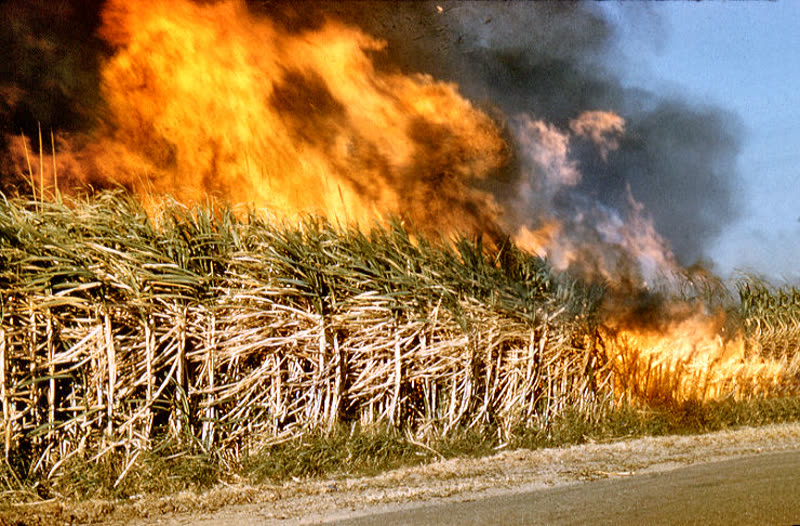
Burning off, cane season, 1959.Peter Forster, CC BY-SA
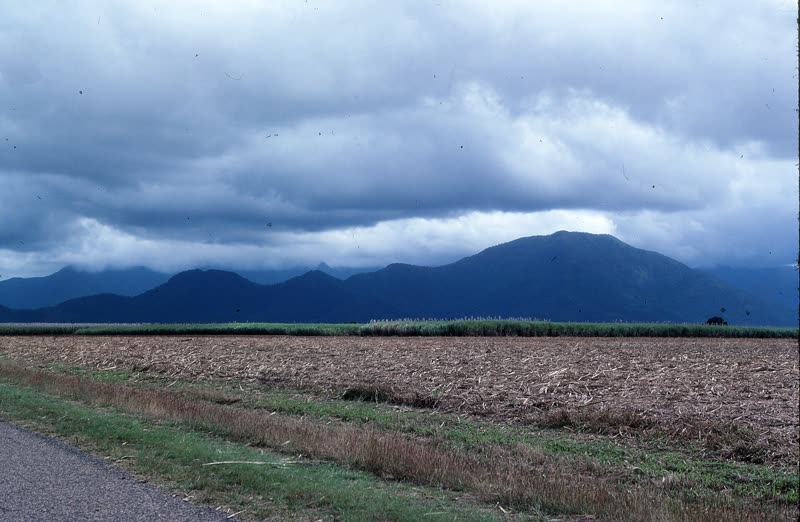
Cane country under the ranges, on film, 1985. The year this story starts.John Robert McPherson, CC BY-SA
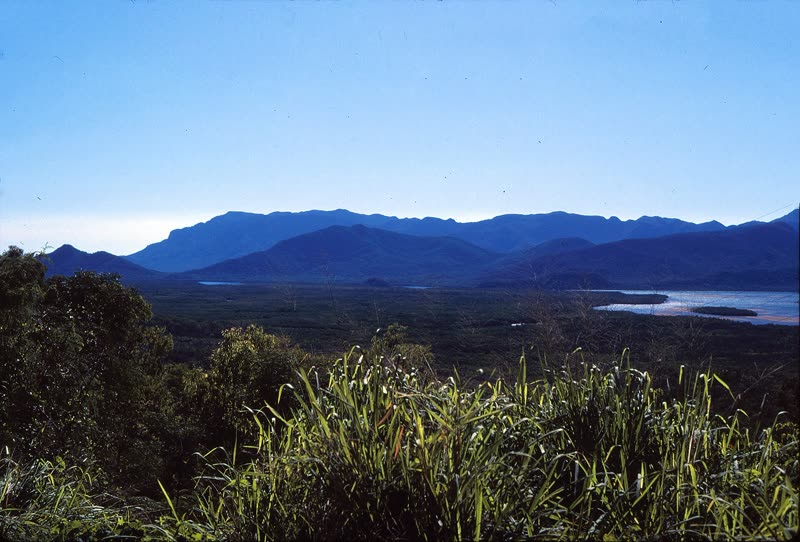
The Hinchinbrook coast, 1985.John Robert McPherson, CC BY-SA
The man who destroyed my family was the very vehicle God used.
John James, to Jonathan Allen Wright, March 2026
Queensland, 1985. Every Saturday.
But when he was yet a great way off, his father saw him, and had compassion, and ran.
Luke 15:20
He was eighteen, at a friend's birthday party in Queensland, when he met a drummer
named Peter Furler. Peter and a couple of mates were starting a band and needed a
singer. John's account of how he got the job hasn't softened in forty years.
“I elected myself. I thought, crikey, how hard can it be? We're not working
for NASA here.”
They rehearsed every Saturday in Peter's parents' garage, which John says they
“graciously confiscated,” and called themselves The News until somebody
pointed out that Huey Lewis had got there first, so they became the Newsboys instead.
Wes Campbell, who ran a five dollar
Friday night Christian coffee shop on the Sunshine Coast, asked to manage them. No
contract, no plan anyone would recognise as one.
And then, in 1987, they left. All of it, for America.
For who hath despised the day of small things?
Zechariah 4:10
1985
The Sunshine Coast, QueenslandA garage graciously confiscated from Peter Furler's parents, every Saturday.
1987They leave Australia for America. Everything after this happens an ocean away from home.
America. 1987.The band from the garage, on the other side of the planet.
A long way from the garageThree frames of the country they landed in.
0miles from the garage
Scroll
The freewayRoads wider than anything on the Sunshine Coast, going somewhere for hours.Ken Lund, CC BY-SA
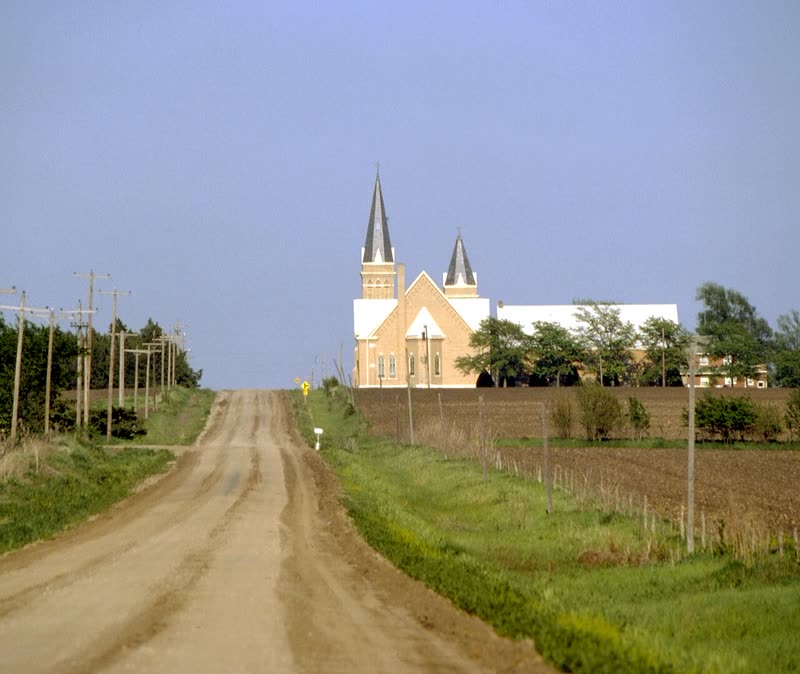
The churchesSteeples with gravel parking lots, a hundred towns deep.Tequask, CC BY-SA
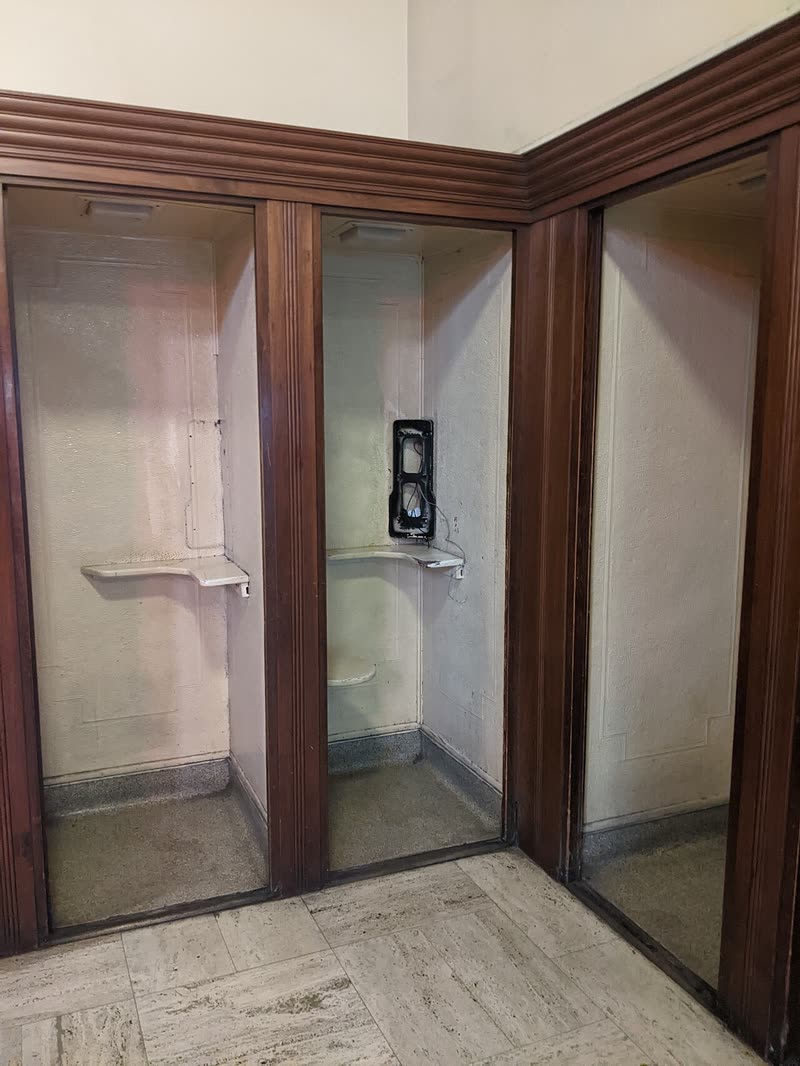
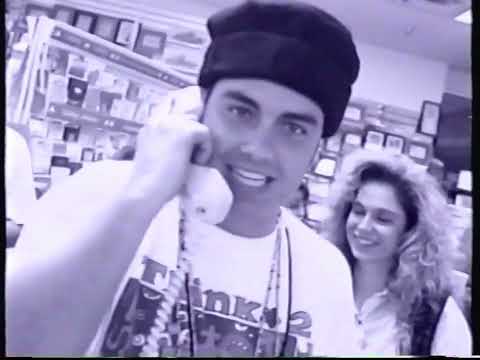
The payphoneHome is a payphone now, and a day ahead.Bobjgalindo, CC BY-SA
When thou passest through the waters, I will be with thee.
Isaiah 43:2
By the nineties the band owned the genre, and it was John out front: the
accent, the dance moves, the voice on the records that carried Christian rock onto
arena stages.
The arena years.
He raiseth up the poor out of the dust, to set them among princes.
1 Samuel 2:8
The run
Nine years, six records.
Every sleeve from the John years. They arrive printed, like everything else here. Touch one to see it in colour.
Read All About It1988
Read All About It1988
Hell Is for Wimps1990
Boys Will Be Boyz1991
Not Ashamed1992
Going Public1994
Take Me to Your Leader1996
Steve Taylor came aboard to write lyrics for one song, the title track of Not Ashamed,
and ended up producing the album. Take Me to Your Leader is the last record John made
with the band. The covers belong to the band and their labels, shown here as the
history they are.
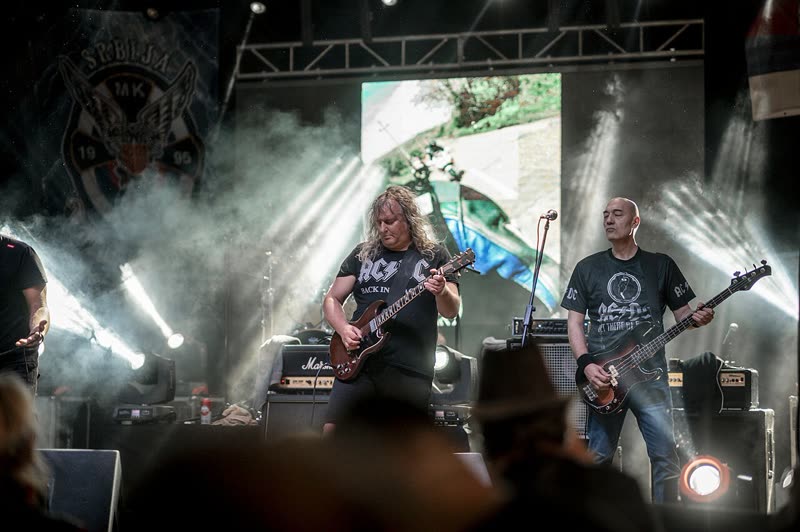
Lights, smoke, a stage. The nineties were a decade of rooms like this.Shixart1985, CC BY
The archive
Watch the rise happen.
Every frame here plays from YouTube, from the uploads credited by their own pages.
Nothing loads or makes a sound until you press play, and nothing is copied out of
anybody's video. Watch it with the next chapter in mind: a band still climbing,
with no idea how close to the edge its singer already was.
The songs
Official audio, from the band's own channel.
ShineOfficial audio
Take Me To Your LeaderOfficial audio
Spirit ThingOfficial audio
I'm Not AshamedOfficial audio
Where You BelongOfficial audio
Truth And ConsequencesOfficial audio
Boycott HellOfficial audio
The footage
The videos as they aired, preserved by fans.
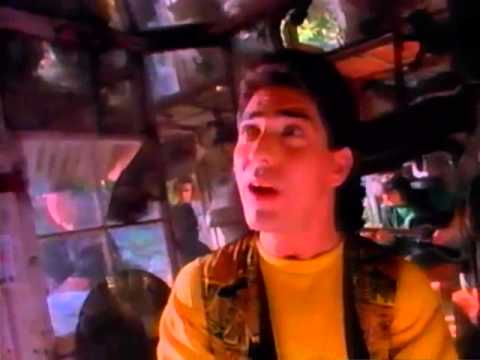
Simple Man, 1991Their first music video. John on lead, Peter Furler on drums.
ShineThe video, restored in 1080p.
I'm Not AshamedThe original video.
Take Me to Your LeaderThe video, upscaled to 4K.
Not Ashamed, the VHSThe full 1993 home video collection.
Live, and on television
The stage show the records were selling.
Flevo Festival, 1994A full set. Rare.
Fire by Nite, 1991One of their earliest American TV appearances.
He was, by his own description, ambitious and hungry for significance. Whatever the
band chased, it caught. And while it was going up, his life was quietly coming
apart.
1985
Queensland
The garage. Peter Furler's parents' place, every Saturday, until the neighbours knew all the songs.
Photograph pending
II The fall
The internet arrived in the middle of the rise. Chat rooms, instant messaging, a
private channel that had never existed on the road before. John has been direct about
what he did with it. Conversations turned into emotional affairs. Underneath all of
it, the drinking got worse.
It ended in a kitchen in 1997. The band was cutting Step Up to the Microphone
at Peter Furler's home studio. That night, the song on the desk was
Entertaining Angels. They took a break, and John told Peter
everything. Within days he was out.
Then came the divorce, the drugs, and a depression that closed over him.
He has since corrected the public version of it: the story that went around was that
cocaine got him thrown out of the band. The cocaine came after. After his wife left,
and after the band did.
He went back to Australia and sold Lamingtons door to door out of a basket. He got
thrown out of a shopping mall by security for it, and heard God laughing at him.
“Just yesterday you were being escorted to the biggest stages in America by
security guards. Now you're being thrown out of a mall by security guards.”
He has one phrase
for what he became in those years, and he uses it without flinching.
A broken and a contrite heart, O God, thou wilt not despise.
He would use that word again, on a piece of paper, in the studio, almost thirty years
after he first earned it.
He tells the whole of it here, in his own voice, to Jonathan Allen Wright. It is the
fullest account of his story he has given publicly, and it's where every quote in
this piece that isn't from a newspaper comes from.
The Man Who Started the Newsboys Then Vanished. John James interviewed by
Jonathan Allen Wright, March 2026.
I had one life when I was on the stage, and then when I came home, I had a personal
life that was so different.
John James, to The Christian Post
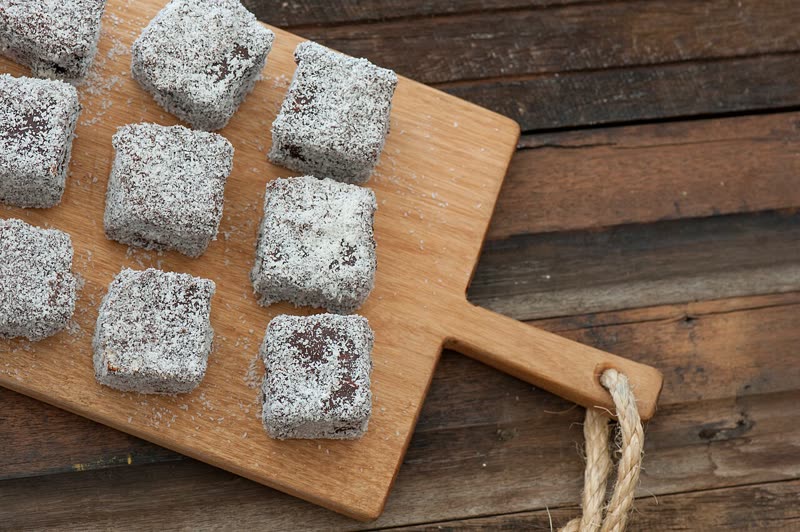
Lamingtons. He sold these, door to door, out of a basket.jules, CC BY
He has never asked anyone to soften it. He names it, he takes it, and when he finally
wrote the book about it he was careful to say what the book was not.
If people are looking for a book that's going to pull the curtain back on CCM and
arm us all with stones, get ready to throw them, this is not the book.
John James, to The Christian Post
That is the rule this piece runs on too.
This is a story about how an album got made.
1997
The exit
The last years with the band. The exit, and the start of the long silence.
Photograph pending
III The man in the middle
And I will restore to you the years that the locust hath eaten.
Joel 2:25
Everything that follows traces back to one person, and it's not me.
David Evans is one of the pioneers of Australian
contemporary Christian music. His fingerprints are on Youth Alive, Hillsong, Hope
Centre Brisbane, Influencers Church and Planetshakers, and more than twenty live and
studio albums carry his name. In Brisbane he ran a worship team called
cre8ive. He's also the reason I'm in this story at all.
He and John made a record together, Breathe Again. By 2006 they were planting
a church on the Sunshine Coast, the same coast the Newsboys had started on.
John and Tanya's ministry today is iReachUSA. Before that it was
Cre8iveREACH. The same word John was building things under in Brisbane twenty years
ago is still on the door.
If you want to know who Dave was before any of this, it's on tape. Youth Alive
rallies, thousands of kids, and him out front.
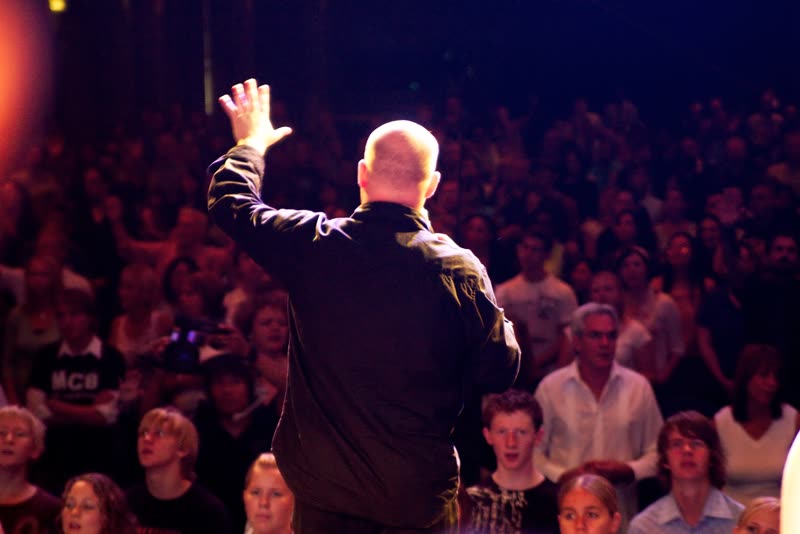
Will Your Soul Survive?David Evans at a Youth Alive rally, South Australia, 1994.
I Can FeelHis song, from the Youth Alive years.
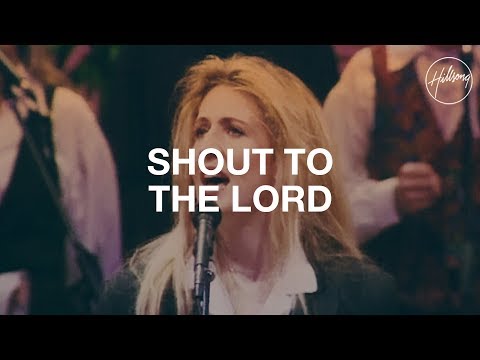
Shout to the LordHillsong, the nineties. That is Dave at the microphone, and the shirt alone is worth the click.
Dave is also the only reason I know John at all. He introduced us more than a decade
ago. We had dinner a couple of times, and then I didn't see John for ten years.
And here's the part I didn't see until I went looking for it while writing this.
Dave is in Florida now, with Source Church in Ellenton. The other
record I was making in that same stretch, the one that had me running two albums at
once, was Source Worship's first live album. Same church. Same man in
the middle of both.
Dave, into the light. The stage years.Courtesy David Evans
Dave now. Florida, Source Church.Courtesy David Evans
For if they fall, the one will lift up his fellow.
Ecclesiastes 4:10
Home, the long way.
2006
Brisbane · cre8ive
The rebuild years. David Evans doing what he has always done: leading a room to Jesus.
Photograph: courtesy David Evans
IV The room
Here is how thin the thread was. My family and I had just moved to Florida, for the
arrival of our first grandbaby. Dave didn't know that. He still thought I was in
Colorado, and he hired me to fly in and wire up the Pro Tools rig at
Source Worship's studio at Source Church in Ellenton, Florida. One
room, two booths, a template that needed building.
Toward the end of that day, John James walked in. Dave started laying out the plan for
him: they would fly me in from Colorado for the vocal sessions.
I had to interrupt. We live here now. Ninety minutes up the road.
Dave stopped, did the math, and turned to John. You're going to hire David. He's
going to take your project to another level. And that was that. A handshake,
ten years of nothing, and then John was standing in front of a microphone in the room
I had just wired. I was hired to engineer his vocal sessions. That was the entire job.
It became vocal production, because he hadn't sung seriously in years and was nervous
about it, and somebody had to decide what to keep and what to try again tomorrow. Then
it became writing, because lyrics and phrases weren't landing and we changed them.
Then chords started moving too. Then Dave and I were producing the record.
What John and Dave had brought me were rough demos built on Apple loops, in
the wrong keys, in the wrong time signatures. Our job was to turn that into
music. I ended up playing or programming guitars, bass, keys and synths across the
album, editing the drums, and mixing and mastering the whole thing.
Nobody handed me the mixing chair. When the record was ready to mix there
was a big mix-off. I had recorded and produced and touched so much of this album that
I wanted it, and at the same time I wasn't sure I was the right one for it, until I
dug in and remembered: this is a different hat, and it's the one I've worn for more
than twenty years. So I had fun with it. My mix won, and the masters came with it.
The last time he made an album, it ran through an analog console. This one lived
inside a computer.
And he knew exactly what he didn't want it to sound like. A few months before the
record came out he was asked what he made of Christian music now, and he was polite
about it for about one sentence.
Real bounces from the sessions. They play below.
There's a huge lane that a lot of artists live in, and it's that congregational
worship style. Which is amazing music, but it gets a little bit bland at times for me.
It's almost like if you want to be heard, you have to write music that is in this lane.
I pray that there is an alternative emergence of bands coming up that are willing to
write music outside of that lane.
John James, to Jonathan Allen Wright, March 2026
That is the brief. It was never written down and nobody said it out loud in the room,
but it's what we were doing. Everything below this line is a record built to sit
outside that lane.
2024
The booth, from the desk
Not Ashamed. Romans 1:16. iReachUSA. He got dressed that morning and this is what he put on.
Photograph: David Glenn, 2024
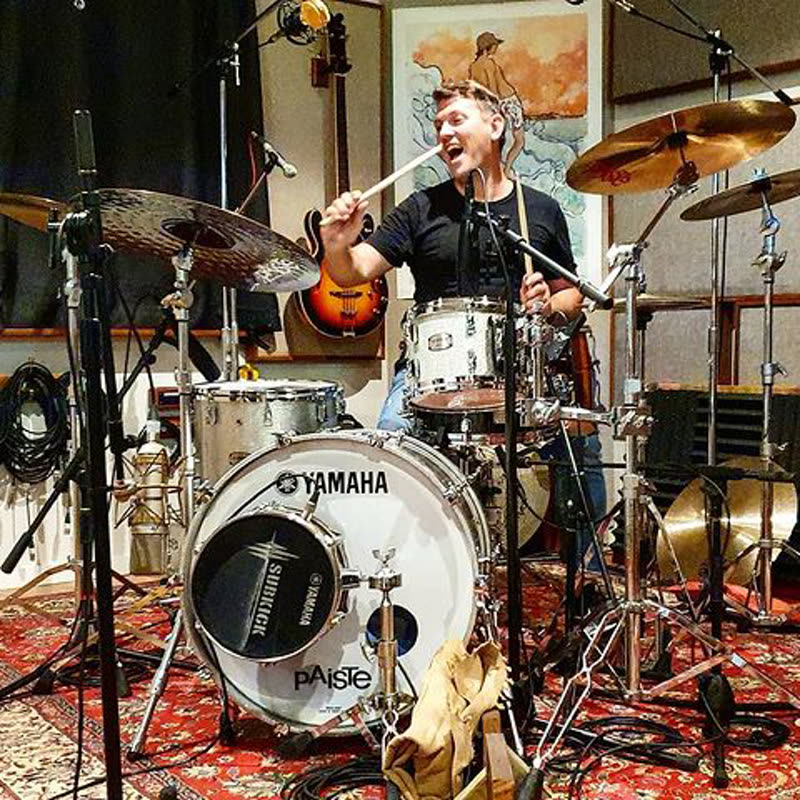
Between takes. Ellenton, 2024.David Glenn
The shirt
I didn't stage the photograph above and I didn't notice what it meant until I went
back through the footage to write this. Look at what he has on.
Not Ashamed. Romans 1:16. iReachUSA.
Not Ashamed is the Newsboys record from 1992. It is his. He sang it, back when
the whole thing was still ahead of him and none of it had come apart yet. Romans 1:16 is
the verse the title comes from: I am not ashamed of the gospel. iReachUSA is the ministry he and Tanya run now, on the
other side of everything.
So the man is standing in a vocal booth for the first time in almost thirty years,
singing a song about his own scars, wearing the title of the album he made before he
fell, printed above the name of the thing he built after. Nobody art-directed that. He
just got dressed that morning.
That is the man I watched all summer. A man on a mission. Everyone around him was
focused on their job, the task in front of them. John carried a vision and a purpose,
and it never switched off.
2024
The sessions
The sessions. June to August 2024, Ellenton, Florida.
Photograph: David Glenn, 2024
From the sessions
The contact sheet
Every demo, every finished song
The album, both ways.
This is the part I have never seen anyone publish. Below is the record twice over:
the demos exactly as John sent them, and the finished masters, on the same row.
Press play, then hit the other button mid-song and it keeps playing from the same
place in the other version.
About the order. This isn't the album's running order. It's the producer's
order: the songs I want in your ears first. The record's own sequence is on the
record.
About the sync. The demos and the finished songs don't line up bar for bar,
because we rearranged these songs heavily. Switching sides maps your position
proportionally, so the starts and the endings meet and the middles drift. That drift
is the edit. It is the point.
About the waveforms. Top half is the original demo, bottom half is the record.
You can see the arrangement getting built before you hear it. Click anywhere on a
waveform to scrub.
About the build. Under a song, open The build to hear the record
assemble itself, in the order a mix gets prepped: drums, then bass, then guitars,
then keys, then voices, then the prints of everything so far.
Scars, on paper. “They see the shine but not the shade. They don’t know the scars that I’ve made.”
Photograph: David Glenn, 2024
That is the bridge of Scars, on the page, in the room where we cut it.
Read the last line again.
No more a lepper, who's guilty with a past.Scars, the bridge, on the sheet above
He isn't reaching for a Bible image there. That's the word he uses for himself when
he describes the years after 1997, when the calls stopped being returned and his
number was blocked. He wrote the thing he'd been called, and then he wrote
no more in front of it. I didn't know that when we tracked it. I just
thought it was a good line.
He did, though. Look at the chorus above it on that same page: So come Lord
Jesus now, come and take my hand. The whole song is a prayer, aimed at Jesus
by name. In scripture it's the lepers who get made clean when they meet him. John
knew exactly what he was writing.
To give unto them beauty for ashes, the oil of joy for mourning.
Isaiah 61:3
V Who it's for
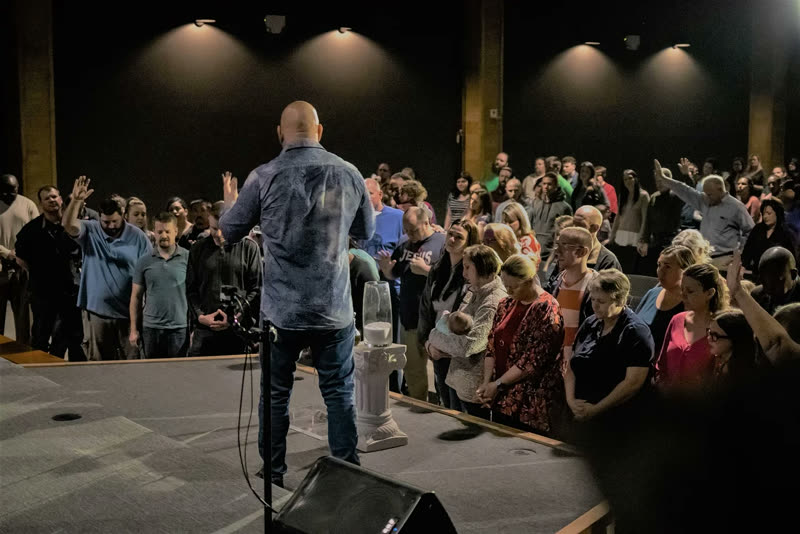
John and Tanya run iReachUSA now. Prisons, recovery centres, schools, military bases.
Rooms full of people who have been called what he was called, sitting in the
middle of their own 1997.
That is where these songs go. He called the record God of the Second Chance
because that's a description of his life, not a figure of speech.
And ask him where the second chance came from and he won't credit the industry, or
time, or luck. He points at Jesus. He has been pointing at Jesus since a rattling van
in 1979, and losing everything did not change the direction of his finger.
Old things are passed away; behold, all things are become new.
2 Corinthians 5:17
John, now46 minutes with David A.R. White, August 2026.
VI Credits
The hands on this record.
The story that matters here is John's, and he tells it the same way every time,
pointing past himself to Jesus. This page is his story first. But a record is also made by
hands, in rooms, over long nights, and that part rarely gets written down anywhere.
So here it is, with gratitude:
God of the Second Chance
Album credits
Musicians
Lead vocals
John James
Lead vocals
Tanya James (chorus, “Square Peg”)
Backing vocals
John James, Tanya James, David Evans and David Glenn
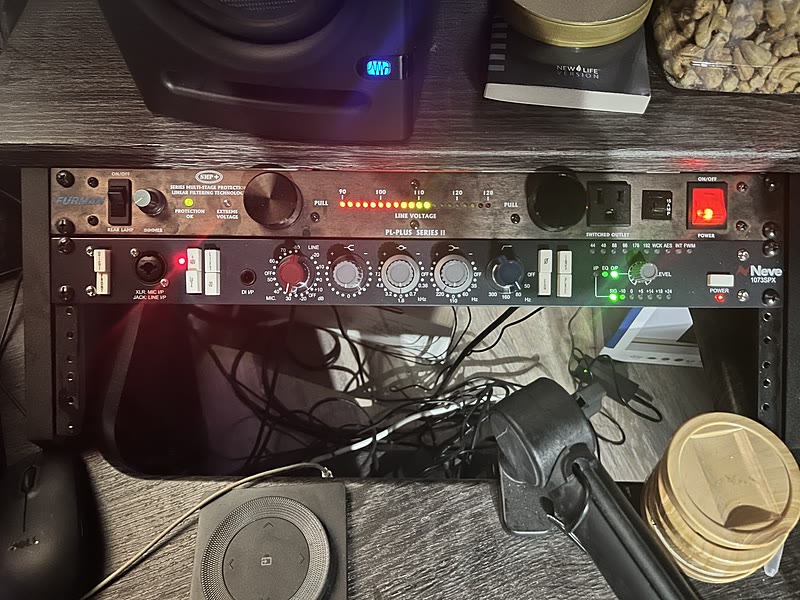
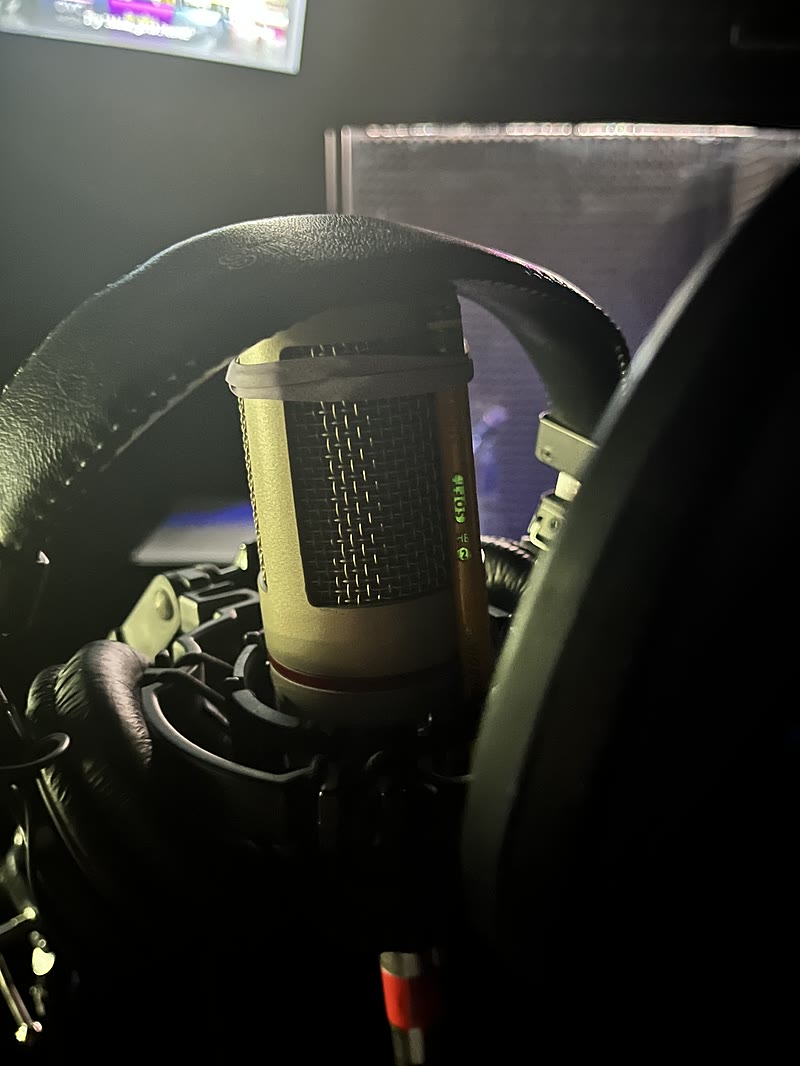
The microphone and the headphones that made the record.David Glenn
Darran Muller, at his kit in Australia. His drums crossed the ocean as files.darranmuller.com
Mid-take, his room behind him.darranmuller.com
On the drums
Darran
Muller cut his drums at his own studio in Australia, with Dave and me
producing him down the wire, and he behaved the way every producer wishes every
drummer would. Every time we asked for something he did it. Takes, retakes, open hat,
closed hat, a different feel on the second verse. He followed direction exactly and he
played it right the first time, over and over.
Thirty-seven years after the band flew that ocean, the drums for this record crossed
it the other way, as files.
I edited his drums across the record and I want to be honest about what that involved:
almost nothing. They didn't need it. That's the highest compliment a drum editor can
pay a drummer.
What that season gave my family can't be put on paper.
Consider this the thank-you note.
One more credit, for the record. Everything on this album that isn't the songwriting
ran through my hands at some point. So if something on it bothers you, it's mine.
The songwriting is safe.
That is the record as it was made. Here is how to get inside it yourself.
The bass. It is in the multitracks below.David Glenn
VII Mix it yourself
Real multitracks, off the actual record.
Not a sample pack, and not a session built to be easy. These are the actual tracks
from Blessed, the song that opens this page's running order: drums, bass,
guitars, keys, voices, click. One song, given away whole. Pull it into your DAW
and go.
Then send it back. There is a drop box below the download, and the mixes that come in
get posted here with the mixer's name on them. You will be able to hear what a room
full of other engineers did with the same twenty-odd tracks, which is the most useful
thing in mixing and the hardest thing to get hold of.
The other ten songs live in the
Control Room, where members get the whole album's multitracks and vote which
songs get the full mix breakdown treatment on the streams.
Free, and shared with John's blessing. If you post your mix, tag
John James first, then The Mix Academy. If you're
feeling generous, tag iReachUSA
too, which is his and Tanya's ministry and the reason any of this exists.
VIII If you stepped away too
John isn't the only one who walked away from music. If you fronted a band in another
decade, if there are songs sitting in a drawer or a hard drive or a shoebox of
cassettes, read this part slowly: this record started where yours is sitting
right now. Apple loops, wrong keys, wrong time signatures. That is what
came in the door. You just listened to what went out.
Taking a record from that to done is what I do. Production, players, editing, mixing,
mastering, the whole distance. If this page made something itch, tell me about your
songs. Worst case, you get an honest answer about what they need. And if you're an
engineer and it was the waveforms that got you, The Mix Academy is where I teach
exactly how records like this get mixed.
This page exists because a man with nothing left to prove sent somebody his rough
demos anyway. If yours are sitting in a drawer, do what John did. Send them.
He which hath begun a good work in you will perform it.
Philippians 1:6
Keep going
More from The Mix Academy.
Do it yourself
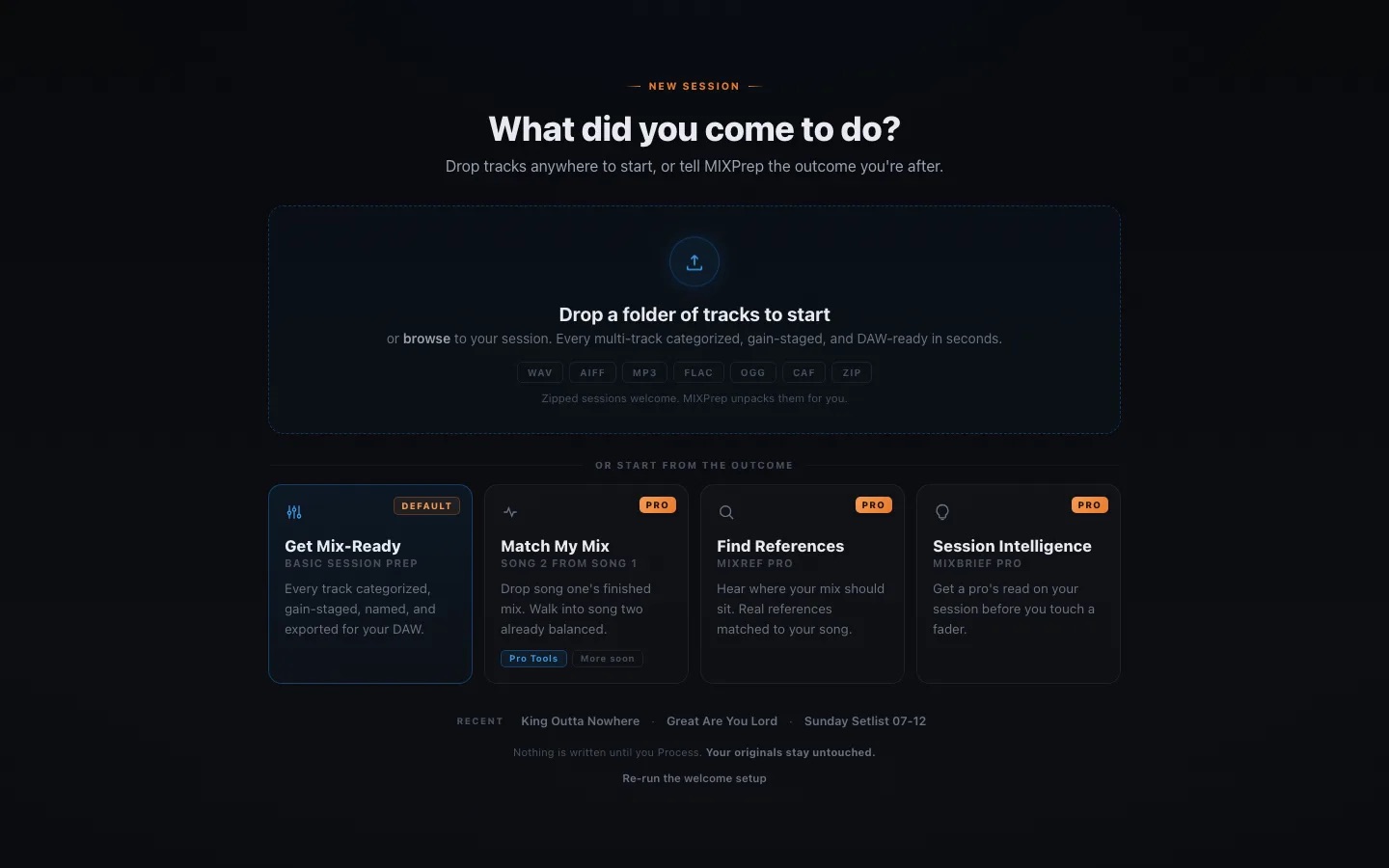
MIXPrep
from $97once
The Mac app that gets a session ready to mix.
Naming, organization and gain, automatic
Done before you hear a note
Not for you if your problem is the mix itself. This fixes prep, not decisions.










 MIXPrep